Back pain physiotherapy
Assessment considers how your back pain behaves, the movements and daily demands that affect it, and the strength or mobility needed for a practical rehabilitation plan.
Assessment-led physiotherapy for back pain, neck pain, sciatica, knee and shoulder rehabilitation, sports injuries, and a considered return to activity.
Common situations
Musculoskeletal concerns can affect muscles, joints, tendons, ligaments, and the way you move through work, sport, and daily life. Care begins with understanding what you feel, what has changed, and what you want to return to.
Assessment considers how your back pain behaves, the movements and daily demands that affect it, and the strength or mobility needed for a practical rehabilitation plan.
Care may address neck movement, posture-related demands, strength, and the activities that currently aggravate or limit you.
An assessment at home helps clarify your symptoms, movement tolerance, and the everyday activities that are currently difficult or uncomfortable.
Knee rehabilitation may focus on comfortable movement, strength, walking, stairs, and a gradual return to work, exercise, or sport.
Shoulder rehabilitation is shaped around reaching, lifting, strength, movement control, and the tasks you need to resume with confidence.
How physiotherapy may help
The initial assessment may look at symptom behaviour, relevant movement, strength, activity demands, and the factors that currently limit you.
Home treatment
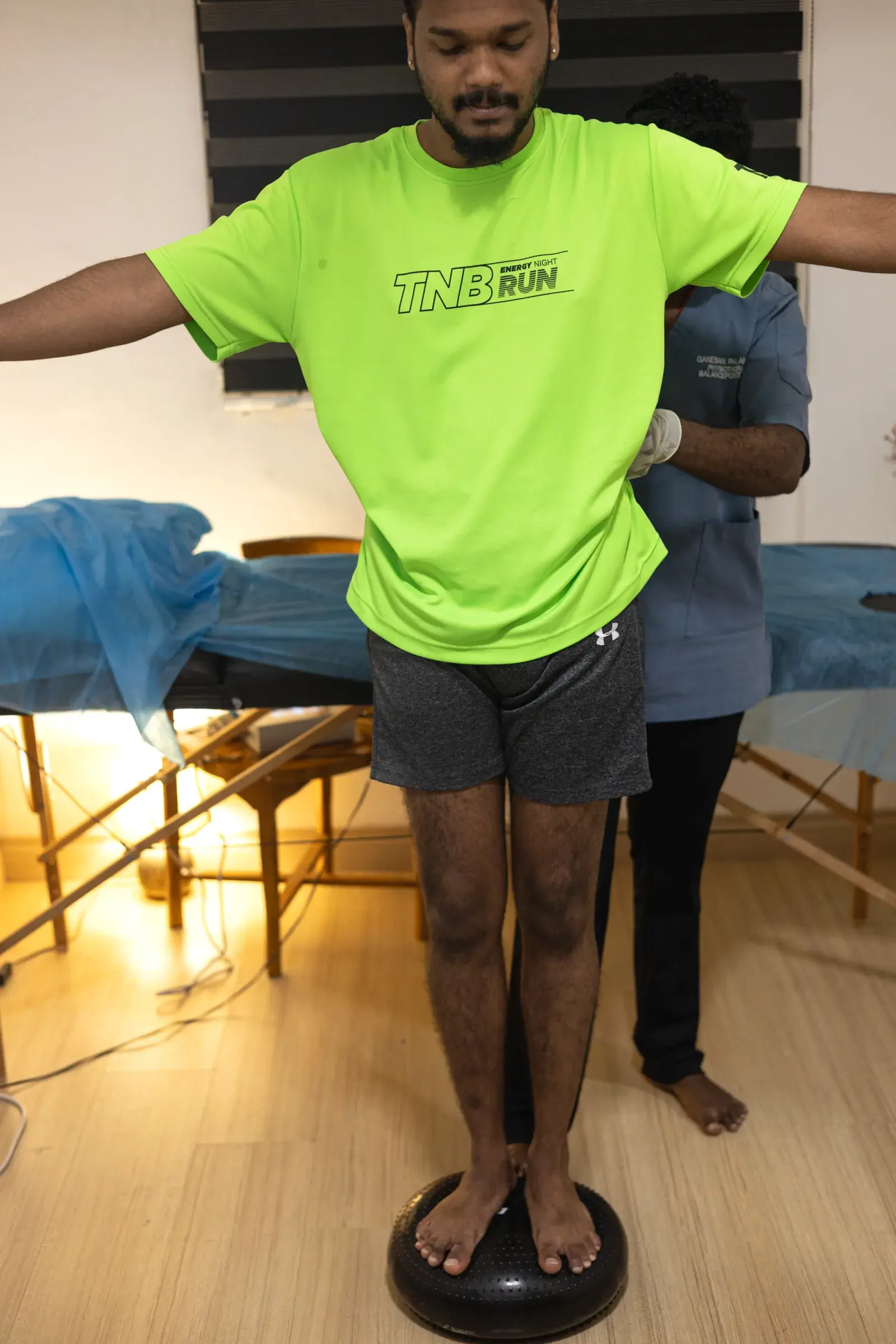
Home treatment allows the physiotherapist to understand how your symptoms affect the movements, work areas, stairs, or exercise spaces you use every day. A safe, reasonably clear area is usually enough for assessment and suitable exercise.
Wear clothing that allows the relevant area to move comfortably and share any medical or imaging information you already have. The first visit begins with a conversation and movement assessment before an appropriate treatment and exercise plan is discussed.
Related services
Share your general concern and location so BalancePoint can clarify whether a home physiotherapy assessment may be suitable.